

Can a glance reveal how healthy our brain is? The search for digital biomarkers of cognitive health.
Today, many people carry devices that continuously track information about their physical health. Smartwatches measure heart rate, physical activity, and sleep, providing insights into our physical condition over extended periods of time. When it comes to our cognitive health, however, the situation has been different so far: attention, working memory, and cognitive flexibility are typically assessed at specific points in time using standardized psychological tests, often only after a problem has become apparent.
But cognitive performance is not static. How focused, attentive, or mentally flexible we are, can change over the course of a day and over longer periods of time. Could such changes be monitored as continuously as certain physical health indicators?
This is precisely the question that Soma Reality and Hogrefe are exploring as part of a research collaboration. Together, the two partners are investigating whether everyday eye movements can provide clues about changes in cognitive functions.
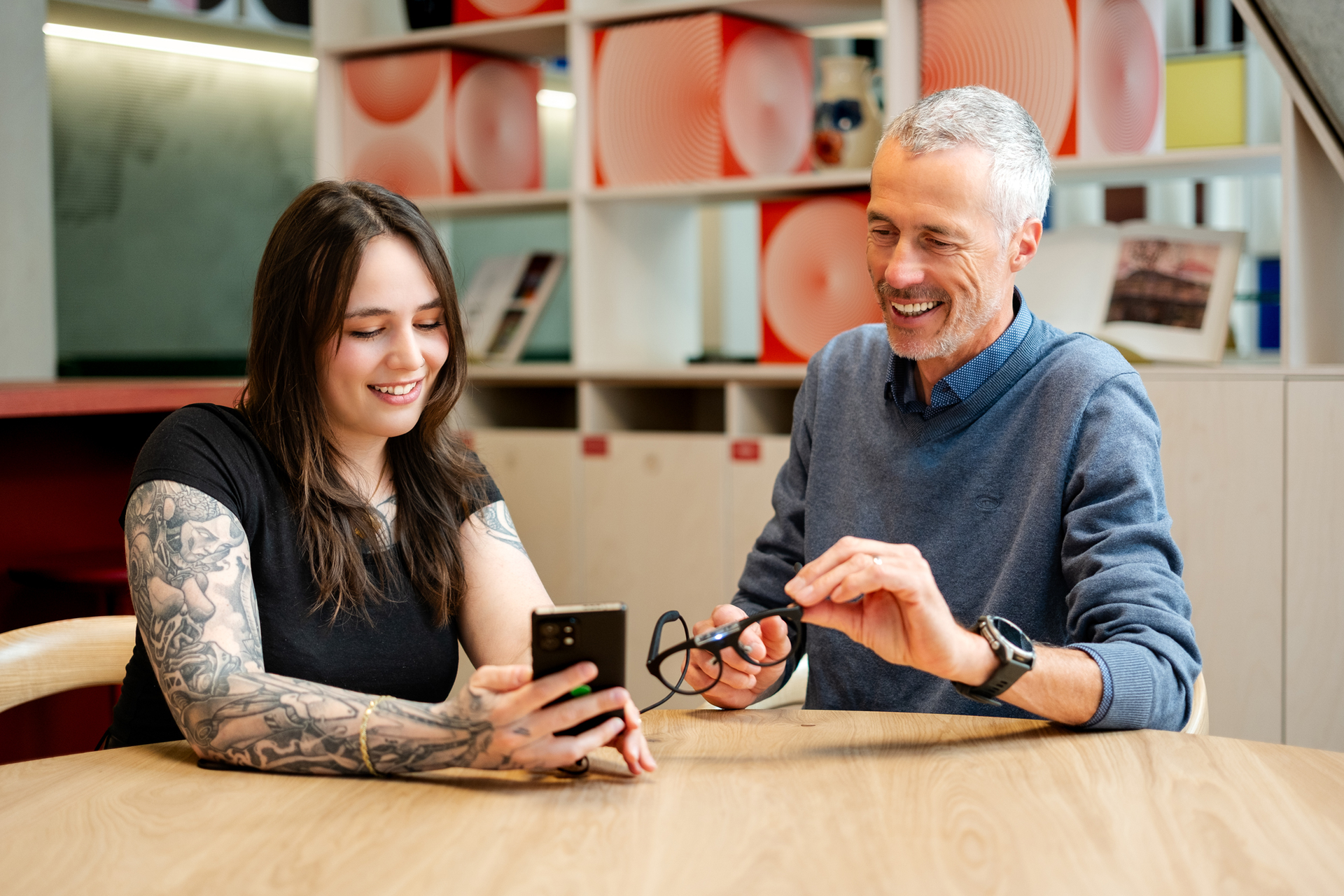
Foto: © Soma Reality
Why our eyes, of all things?
Where we look, how we visually explore our surroundings, and how precisely we control our gaze are closely linked to various cognitive processes. These include, among others, attention, working memory, and executive functions. At the same time, modern mobile eye-tracking systems make it possible to record eye movements not only under strictly controlled laboratory conditions, but increasingly also during everyday activities.
This opens an interesting prospect: Could certain characteristics of our gaze behavior serve as digital biomarkers, that is, as measurable digital signals that provide insights into our current cognitive state?
Eye-tracking would provide complementary information to traditional psychological testing methods. A standardized test specifically measures certain cognitive functions at a defined point in time. In the future, mobile sensors could additionally show how certain characteristics change over the course of hours, days, or weeks.
This is still a research question. To determine whether reliable conclusions about the cognitive health of a person can indeed be drawn from eye-tracking data, the relevant measures must first be scientifically validated.
Technology Meets Psychometrics
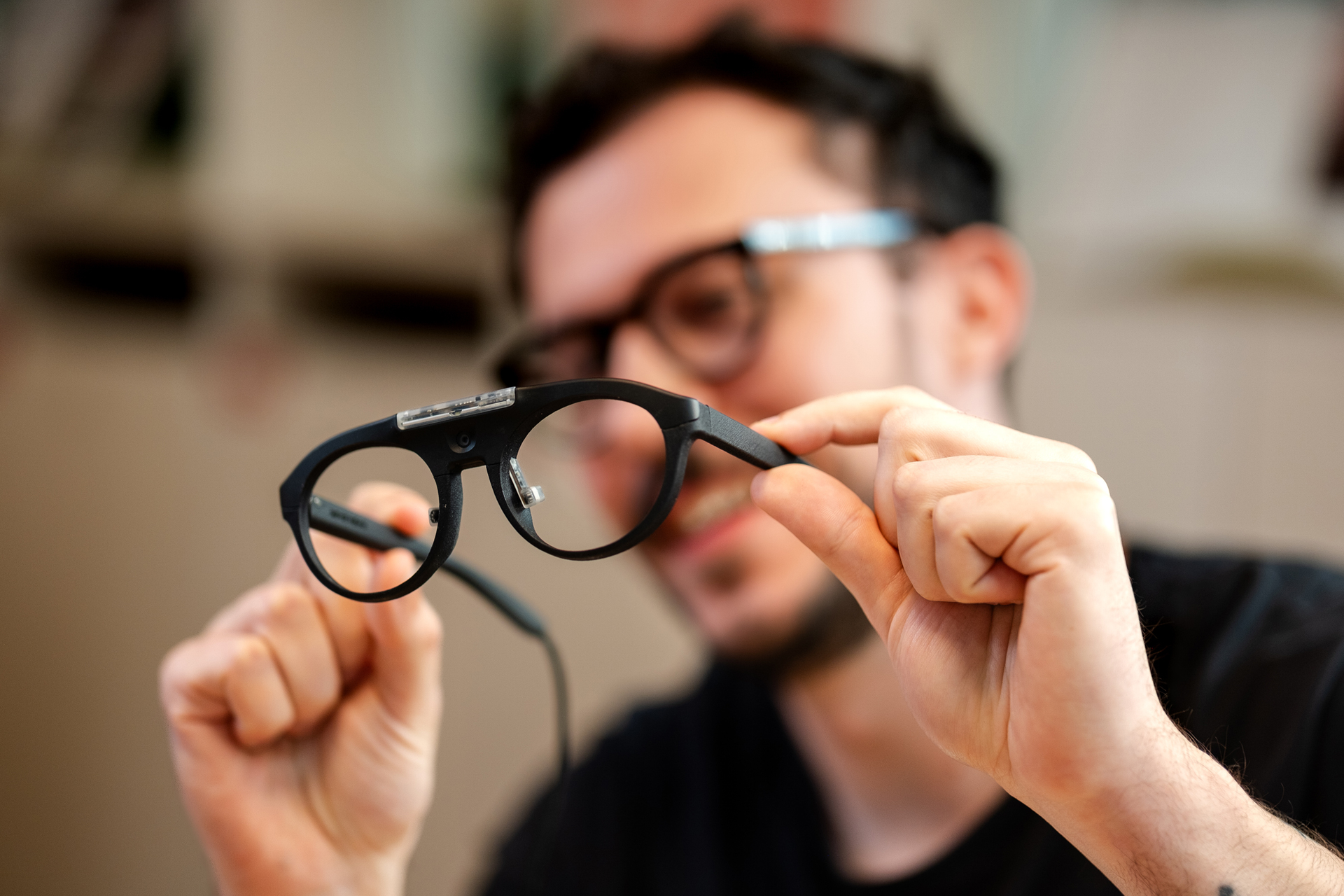
This is where the collaboration between Soma Reality and Hogrefe comes in. Soma Reality is exploring how cognitive processes and states can be captured and analyzed using eye-tracking. To this end, the company is developing eye-tracking-based technologies that make cognitive changes objectively measurable. The goal is to assess cognition not only selectively under controlled conditions, but also in real-world situations and over extended periods of time. Soma Reality’s technology is already used in fields such as research, healthcare, training, and safety-critical work environments.
Hogrefe brings its expertise in psychological diagnostics and psychometrics to the collaboration. In order to assess whether new digital metrics actually provide insight into cognitive functions, scientifically established reference methods are needed.
Soma Reality and Hogrefe are therefore jointly investigating whether selected characteristics of eye-tracking behavior correlate with the results of established cognitive testing methods. In the long term, the goal is to determine whether such data can be used to develop a robust model of cognitive health.
Four Weeks, 29 Participants, and a Wealth of Eye-Tracking Data
A pilot study at the Medical University of Vienna marked the first step in this joint research. Over a period of four weeks, 29 participants came to the lab once a week. During each visit, they wore mobile eye-tracking glasses for about four hours.
However, they did not spend those four hours sitting in front of a traditional experiment. Instead, they engaged in activities that were as natural as possible: they read books, played board games, or conversed with others.
In addition, their cognitive performance was assessed at the beginning and end of each session, for a total of eight measurement points. Three areas were examined: cognitive flexibility, working memory, and selective attention and concentration.
Established cognitive assessment methods were used for this purpose, including the d2-R published by Hogrefe, a test designed to measure attention and concentration. Together with other cognitive tests, the d2-R served as an established reference point for the novel eye-tracking data.
The results of these tests were then correlated with features from the eye-tracking data recorded during the four-hour period of everyday activities.
A follow-up study with a broader age range of participants and the same study design, this time spanning 12 weeks, has already begun.
What can our gaze reveal about cognitive changes?
Two aspects of gaze behavior were examined in particular: first, the precision of certain eye movements, and second, the way in which people explore their visual environment.
The latter can be understood, in simple terms, as a spectrum: Sometimes we view our surroundings more broadly and exploratively; other times, we focus our attention more intently on individual details. Such differences in gaze patterns could be related to underlying cognitive processes.
The results of the pilot study provide initial insights into this. Changes within the same individual over time were particularly interesting. If a person’s gaze control precision at a specific measurement point in time was higher than usual for that person, this was also associated with greater cognitive flexibility in the statistical model. In turn, more exploratory gaze behavior than usual was positively associated with working memory performance.
This leads to an exciting possibility: In the future, eye-tracking could be used to detect changes relative to a person’s individual baseline and thus, for example, warn of a noticeable decline over time.
A Promising Start, and Further Research Questions
The results of the pilot study provide initial, promising evidence that everyday eye movements may reflect changes in cognitive functions. At the same time, this is only a first exploratory step: The observed correlations must now be investigated and confirmed in further studies with larger samples.
A key question will be how stable and reliable these correlations are across different individuals, situations, and time periods. For individual eye-tracking characteristics to develop into meaningful, long-term digital biomarkers, they must be comprehensively validated scientifically.
This is precisely where a key focus of the collaboration between Soma Reality and Hogrefe lies: technological capabilities and psychometric expertise will be combined to jointly investigate how robust these new measurement approaches are.
From a single test to observation over time?
If the currently ongoing 12-week study confirms that certain eye-tracking features are reliably associated with changes in cognitive functions, this could lead to new diagnostic possibilities in the long term.
While psychological tests provide specific information at a given point in time, mobile eye-tracking systems could, in the future, offer supplementary insights into how cognitive functions change in everyday life over extended periods. This could be of interest, for example, in research on cognitive fatigue, healthy aging, or long-term changes in cognitive performance.
However, such an application is still a long ways off. The pilot studies are a first step toward understanding what information is contained in everyday eye movements and how reliably it can be interpreted.
This is precisely at the core of the collaboration between Soma Reality and Hogrefe. Soma Reality contributes technological expertise in the field of eye-tracking and the analysis of natural gaze behavior. Hogrefe complements this with its many years of psychometric and diagnostic expertise. Together, the partners are investigating what information about cognitive changes can be gleaned from these new metrics.
Whether a glance can actually reveal how fit the brain is at any given moment remains an open question. However, the initial results show that it is worth taking a closer look.
Hogrefe Innovation Lab
Learn more about the Hogrefe Innovation Lab, where our experts transform psychological research into market-ready products in close collaboration with universities and companies.
Soma Reality
Soma Reality combines eye-tracking technology and neuroscientific research to objectively measure cognitive processes such as attention, mental workload, and fatigue in real time.
Whitepaper
Read the whitepaper on the pilot study, “Towards Cognitive Health Analytics based on Eye Tracking”:
